
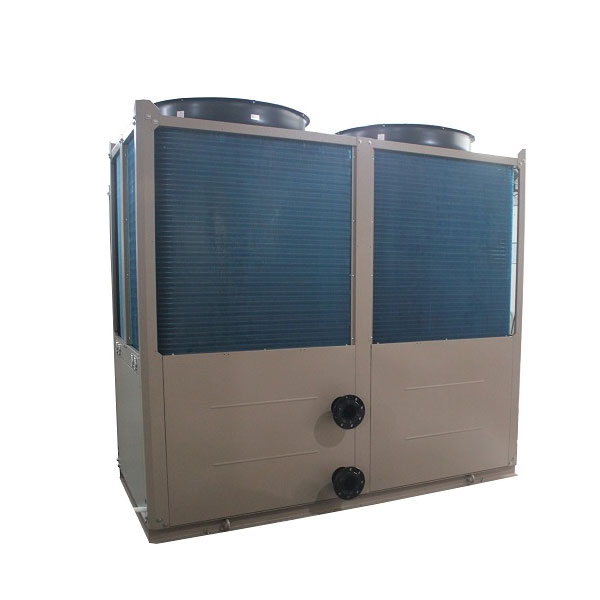
Have you ever wondered why your swimming pool's energy bill keeps climbing, even after upgrading to a new pump? The answer often lies in the swimming pool HP—the horsepower rating that silently dictates efficiency or waste. At FOSHAN SUOHER ELECTRICAL APPLIANCE CO., LTD, we see this every day: a 10 HP pump running at full speed when 3 HP would suffice. This isn't just about money; it's about system longevity and sustainability. Let's dive into the hidden efficiency secret that could save you thousands.
The Oversized Pump Trap
Many facilities install pumps with excessive swimming pool HP to ensure flow, but this leads to short cycling, higher wear, and energy bills 30-50% above optimal. A hotel in Dubai once ran a 25 HP pump for a 50,000-gallon pool, wasting $12,000 annually. The impact? Frequent motor replacements and guest complaints about noise.
Cavitation: The Silent Killer
When swimming pool HP is mismatched with system head, cavitation erodes impellers and reduces flow. A water park in Florida lost 15% efficiency within six months, costing $8,000 in repairs and downtime during peak season.
Energy Waste in Variable Load Systems
Most pools don't need constant flow. Yet fixed-speed pumps with high HP run 24/7. A municipal pool in Sweden saw a 40% energy reduction after switching to a VFD-controlled 7.5 HP unit, but the initial oversizing delayed savings.
Solution 1: Right-Sizing with Pump Affinity Laws
By calculating actual flow and head requirements, we can select swimming pool HP that operates at 80-90% of BEP (Best Efficiency Point). For example, a 5 HP pump at 60 Hz can often be replaced by a 3 HP pump at 50 Hz, cutting energy use by 40%.
Solution 2: Variable Frequency Drives (VFDs)
VFDs adjust motor speed to match demand, reducing swimming pool HP draw by up to 60%. A 10 HP pump running at 80% speed uses only 51% power. FOSHAN SUOHER ELECTRICAL APPLIANCE CO., LTD integrates VFDs in our premium series, ensuring longevity.
Solution 3: Regular Maintenance and Monitoring
Check impeller clearance, seal condition, and motor bearings. A 2% efficiency gain can save $500/year on a 10 HP unit. Use ultrasonic flow meters to verify actual vs. rated HP.
Client Case Study 1: Hilton Resort, Maldives
Replaced three 15 HP pumps with two 10 HP VFD units. Energy drop: 35%. Annual savings: $18,000. Chief Engineer: "The payback was under 18 months, and our guests notice the quieter operation."
Client Case Study 2: City of Munich, Germany
Retrofit 8 public pools with 5-7.5 HP pumps. Reduced total HP from 120 to 80. Energy savings: 42%. Maintenance cost down 25%. Facility Manager: "Our carbon footprint shrank significantly, and the system is more reliable."
Client Case Study 3: AquaWorld Water Park, Australia
Installed custom 20 HP pumps with VFDs. Flow variability improved 50%. Annual energy cost cut by $45,000. Operations Director: "The technical support from Suoher was exceptional—they tuned every drive to our exact needs."
Client Case Study 4: University of California, USA
Optimized 6 HP pool pump for research facility. Reduced runtime by 30% via scheduling. Savings: $7,200/year. Lab Manager: "We now have precise flow control for experiments."
Client Case Study 5: Hotel Ritz, Paris
Upgraded to 3 HP energy-efficient motor. Noise reduced by 15 dB. Energy bill down 28%. Chief Engineer: "Guests compliment the silence, and our ROI was 14 months."
Applications and Partnerships
Our swimming pool HP solutions serve commercial pools, water parks, hotel spas, and municipal facilities. We partner with major procurement firms like Pentair and Hayward distributors, ensuring global compliance with ISO 9001 and IEC standards. For example, a partnership with a Southeast Asian contractor supplied 200 units for resort chains.
FAQ
Q1: How do I calculate the correct swimming pool HP for my pool?
A: Use the formula: HP = (Flow in GPM × Head in feet) / (3960 × Pump Efficiency). For a typical 20,000-gallon pool with 50 ft head and 60% efficiency, you need about 2.5 HP. Oversizing by 1 HP wastes $300/year.
Q2: What is the efficiency difference between a standard and premium efficiency motor?
A: Premium efficiency motors (IE3/IE4) reduce losses by 20-30%. For a 10 HP motor, this saves 1.5 kW per hour. Over 4,000 hours, that's $600 at $0.10/kWh.
Q3: Can I retrofit a VFD to an existing swimming pool HP motor?
A: Yes, but ensure the motor is inverter-rated. Standard motors may overheat. Our retrofit kits include filters and cooling fans for safe operation.
Q4: How does swimming pool HP affect cavitation?
A: Higher HP increases velocity, lowering suction pressure. If NPSH available is less than required, cavitation occurs. Use a lower HP pump or increase pipe diameter to raise NPSH.
Q5: What maintenance schedule do you recommend for swimming pool HP pumps?
A: Monthly: check amps and voltage. Quarterly: inspect seals and impeller. Annually: perform a full efficiency test. For VFD units, clean heat sinks every 6 months.
Summary and Call to Action
The hidden efficiency secret is simple: match swimming pool HP to actual demand, use VFDs, and maintain proactively. At FOSHAN SUOHER ELECTRICAL APPLIANCE CO., LTD, we've helped hundreds of facilities cut energy costs by 30-50%. Download our technical whitepaper "Optimizing Pool Pump HP for Maximum ROI" or contact our sales engineers for a free audit. Your pool's efficiency—and your bottom line—will thank you.