
Introduction
For years, European buyers asked one question about air source heat pumps: "Will it work when it's really cold?"
At -15°C, many conventional units lose heating capacity. At -25°C, some simply shut down.
That era is ending.
Two recent demonstrations — one in Alaska at -30°C, another in Harbin at -35°C — have proven that modern heat pump technology can handle extreme cold.
Both demonstrations shared the same technical foundation: Enhanced Vapor Injection (EVI). This article explains what EVI is, how it works, and why it matters for European buyers.
Two Demonstrations, One Conclusion
Alaska: -30°C with 100% Capacity
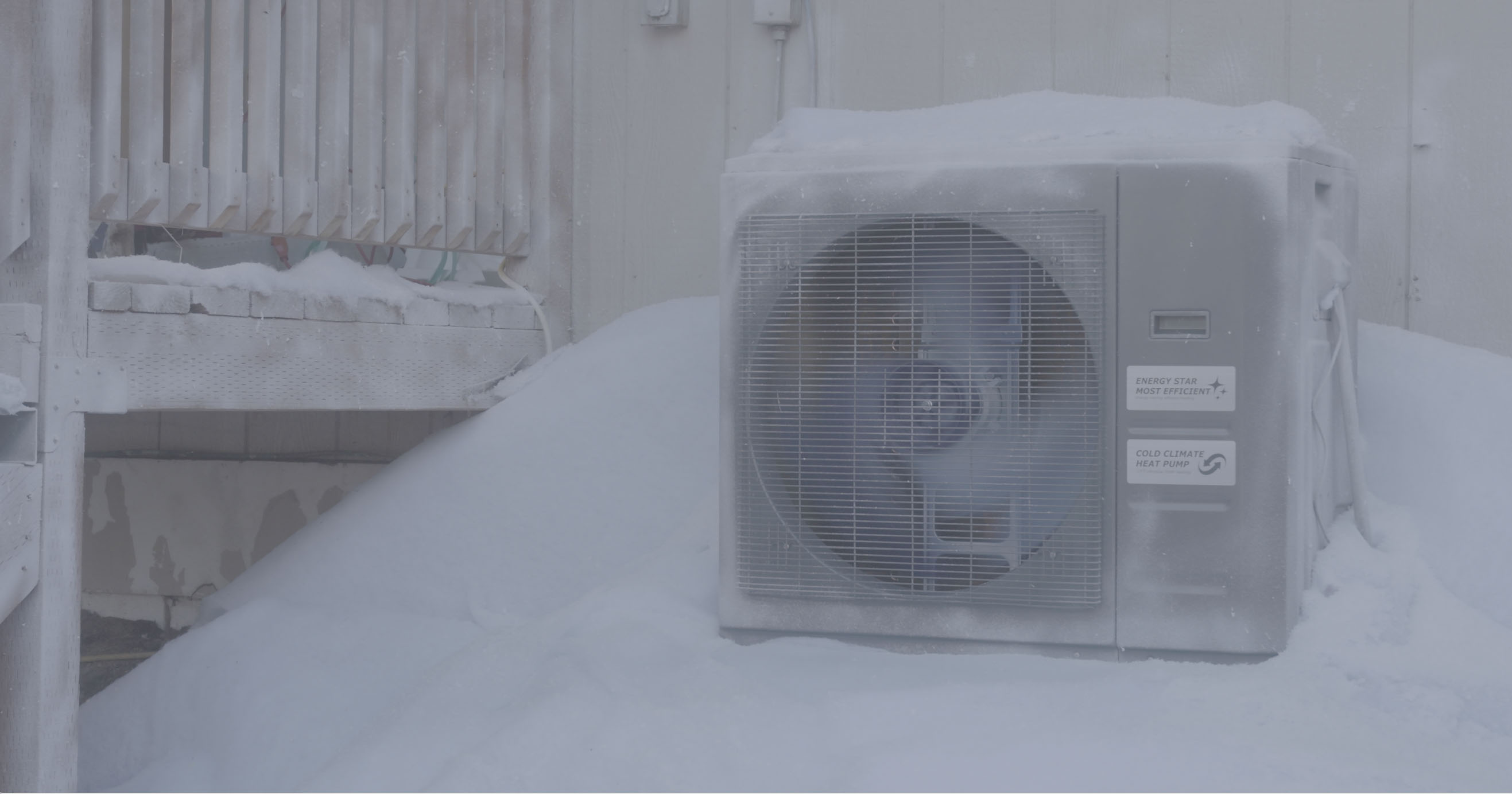
Midea, in collaboration with Discovery Channel, demonstrated an air source heat pump operating at -30°C in Alaska while maintaining 100% of its rated heating capacity.
The unit ran continuously in subarctic conditions, proving that EVI-equipped heat pumps can handle the kind of extreme cold found in Scandinavia and mountainous regions.
Harbin: -35°C Stable Operation
In Harbin, China's "Ice City" where winter temperatures regularly drop to -35°C and below, the Chinese brand Micoe built a 60-square-meter visitor warming station next to St. Sophia Cathedral.
The station provided heating, phone charging, and hot drinking water throughout the 2024-2025 winter. The EVI-equipped air-to-water heat pump ran reliably at temperatures that would shut down conventional units.
What Both Prove
| Location | Temperature | Outcome |
| Alaska | -30°C | 100% rated capacity maintained |
| Harbin | -35°C | Stable operation, no backup heat needed |
The message: Extreme cold is no longer a barrier for air source heat pumps.

The Technology: EVI Explained
What Is EVI?
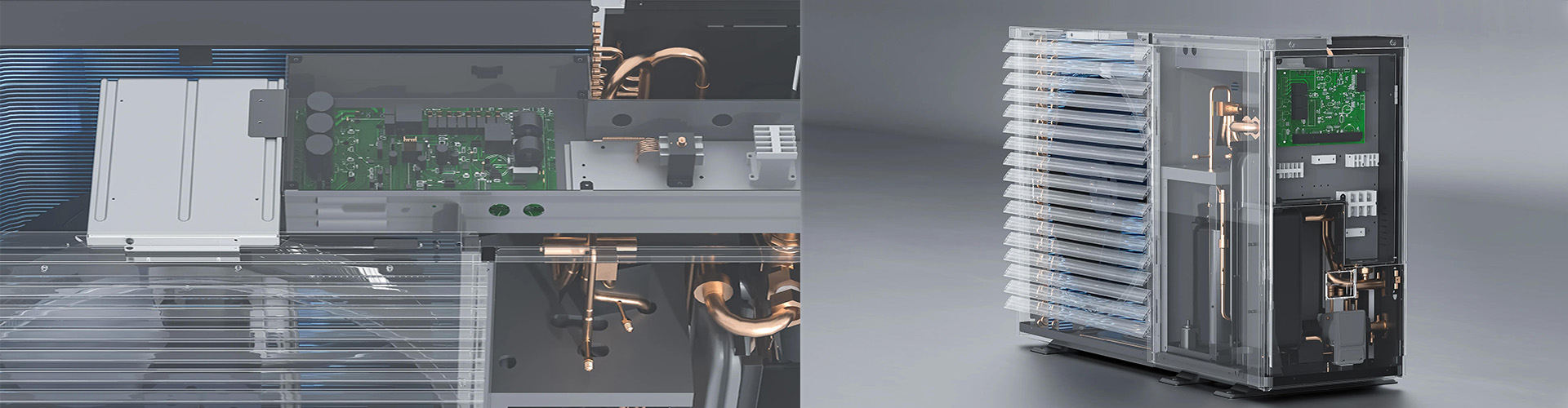
Enhanced Vapor Injection (EVI) — also called "vapor injection" — adds an extra injection port to the compressor.
In a standard heat pump, refrigerant goes through one compression stage. In an EVI system, partially cooled refrigerant is "injected" back into the compressor mid-cycle, creating a quasi-two-stage compression process.
How It Works (Simplified)
Step 1: Main refrigerant flows through the evaporator.
Step 2: Part of the refrigerant is diverted through an economizer.
Step 3: The diverted refrigerant cools the main flow, then becomes vapor.
Step 4: This vapor is injected into the compressor's intermediate port.
Step 5: Both streams are compressed together.
The result: Higher refrigerant flow, lower discharge temperature, and significantly better heating capacity at low ambient temperatures.
Two EVI Methods
| Method | How It Works | Best For |
| Flash tank | Simple, no additional components | Fixed operating conditions |
| Plate heat exchanger | Adjustable injection rate | Variable conditions (recommended) |
The plate heat exchanger design is preferred for cold climates because it can adjust as temperature drops.
Why EVI Matters: The Performance Data
Measured Benefits
According to research published in the Journal of Refrigeration:
At -15°C, EVI systems increase COP by 7.7% to 25.0% while reducing compressor discharge temperature by 6.4°C to 20.4°C.
Lower discharge temperature means less compressor wear and longer equipment life.
Operating Range Comparison
| Temperature | Standard Heat Pump | EVI Heat Pump |
| 0°C to -10°C | Normal | Normal |
| -10°C to -20°C | Reduced capacity | Slightly reduced |
| -20°C to -30°C | High risk of shutdown | Reduced but stable |
| Below -30°C | Inoperable | Still operating |
EVI units operate down to -35°C, as demonstrated in Harbin.
What This Means for Customers
No backup heating required in most European climates
Lower electricity bills — the heat pump handles more of the load
Higher reliability — stable discharge temperature reduces breakdowns
Practical Guidance for Buyers
When Do You Need EVI?
| Climate Zone | EVI Recommended? |
| Southern Europe (Italy, Spain) | Not required |
| Central Europe (Germany, France, UK) | Yes |
| Northern Europe (Scandinavia, Finland) | Highly recommended |
| Mountain regions (Alps) | Yes |
Cost vs. Benefit
| Factor | Standard | EVI |
| Initial cost | Baseline | 9.85 |
| COP at -15°C | 1.8-2.2 | 2.2-2.8 |
| Minimum operating temp | -15°C to -20°C | -30°C to -35°C |
| Backup heat needed in cold climates | Yes | No |
| 10-year total cost | Higher | Lower |
For cold-climate projects, the higher upfront cost of EVI is typically recovered within 3-5 years through lower operating costs.
Questions to Ask Your Supplier
"What is the COP at -15°C, -20°C, and -25°C?"
"Does the unit use a flash tank or plate heat exchanger for EVI?"
"Has the unit been third-party validated at low temperatures?"
"What is the minimum operating temperature without auxiliary heat?"
Conclusion
The demonstrations in Alaska and Harbin are not marketing stunts. They are proof that EVI technology has effectively eliminated the cold-weather performance penalty.
EVI-equipped heat pumps operating at -25°C and below are now commercially available and field-validated.
For European buyers — whether in Germany, the UK, or Scandinavia — this means one thing:
Air source heat pumps are now a viable primary heating solution for cold climates.
The question is no longer "Will it work when it's cold?"
The question is "Why aren't you specifying EVI for your cold-climate projects?"